Matehuirua White Wharehoka
My first birth I planned to have at the hospital. At the time I lived about 1hr north of New Plymouth, so I planned to drive as soon as contractions started, which was quite ambitious for my first baby - lol. My midwife was a top tier carer for us, we could not fault her at all - shout out to Amanda Antoine, e mihi ka tika. At that time there weren’t many Māori midwives practicing in the rohe. However we felt understood of our needs and our cultural practices that were planned were well received. We felt informed to make the decisions we made at that time. We didn’t have Hapū Wānanga, just private antenatal classes as an option so we opted not to, as my tane had exposure to birthing growing up and I felt watching antenatal exercises on YouTube was sufficient.
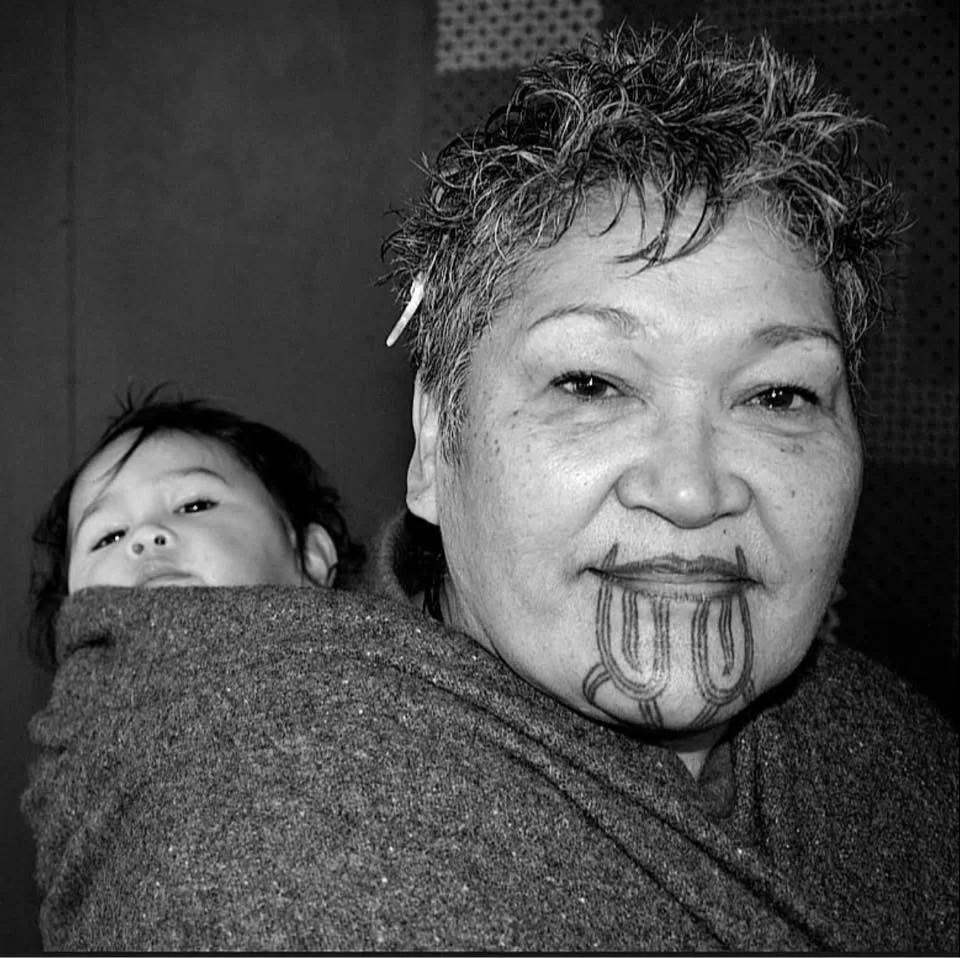
My mother in law Maata, was a former public health nurse here and just an all round birthing expert. She was a master weaver and spent a lot of time in the whare pora space. She had assisted the birth of all her mokopuna and would make the muka tie. She was one of the first to introduce the muka tie into Taranaki District Health Board (TDHB) in the late 80s when my sister inlaw Puna was born. At that time tikanga wasn’t a common or socialised practice here and they asked her to sterilise the muka tie in order to use it in the hospital, even though she argued that the natural healing properties would be damaged by being sterilised.
I jumped in the shower then got in the car, Maata had harvested some harakeke to make the muka tie on the way to the hospital, we travelled from Tongaporutu to Taranaki Base Hospital. She said the fresher the more active the nutrients in the muka would be, to act as an antiseptic on babies pito, hence why she would make it just before birth.
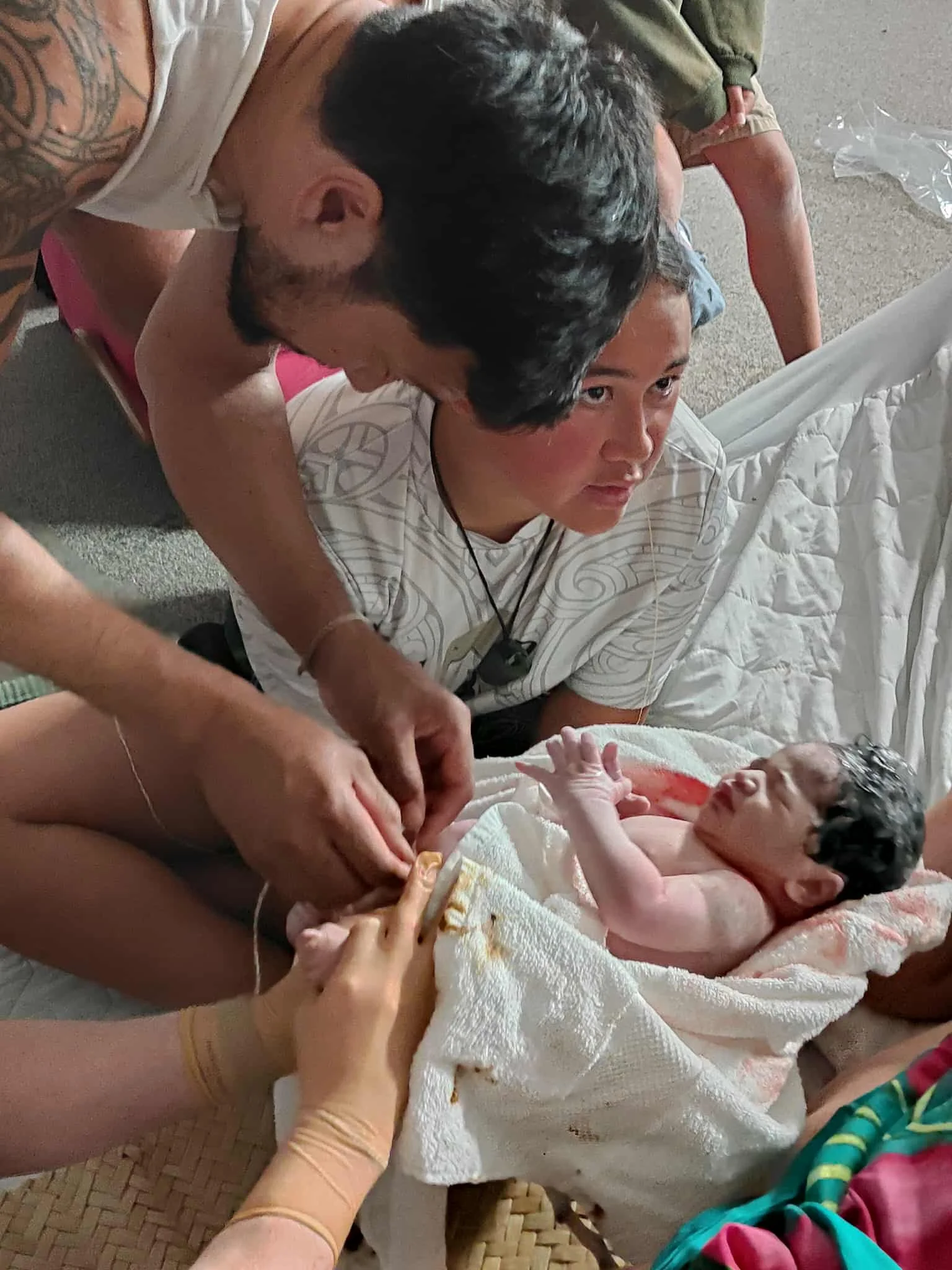
When I arrived I walked in and went straight to the shower and sat down on a chair and then ended up in the bath for a short time and then the birthing pool. I arrived and I was about 6cm dilated by 10am I had birthed my beautiful 9 pound 3 ounce baby into the water her kui called her into her pāpās hands, Maata directed Te Akau as he tied the muka and cut it with a mussel shell. As I was getting sorted out the mama left the room to allow me privacy and buy some kai to eat once all mine and babies checks were complete my siblings and koro arrived and we had a hakari in our labor suite to whakanoa. This was the first Māori cultural birthing experiences to witness for our midwife.
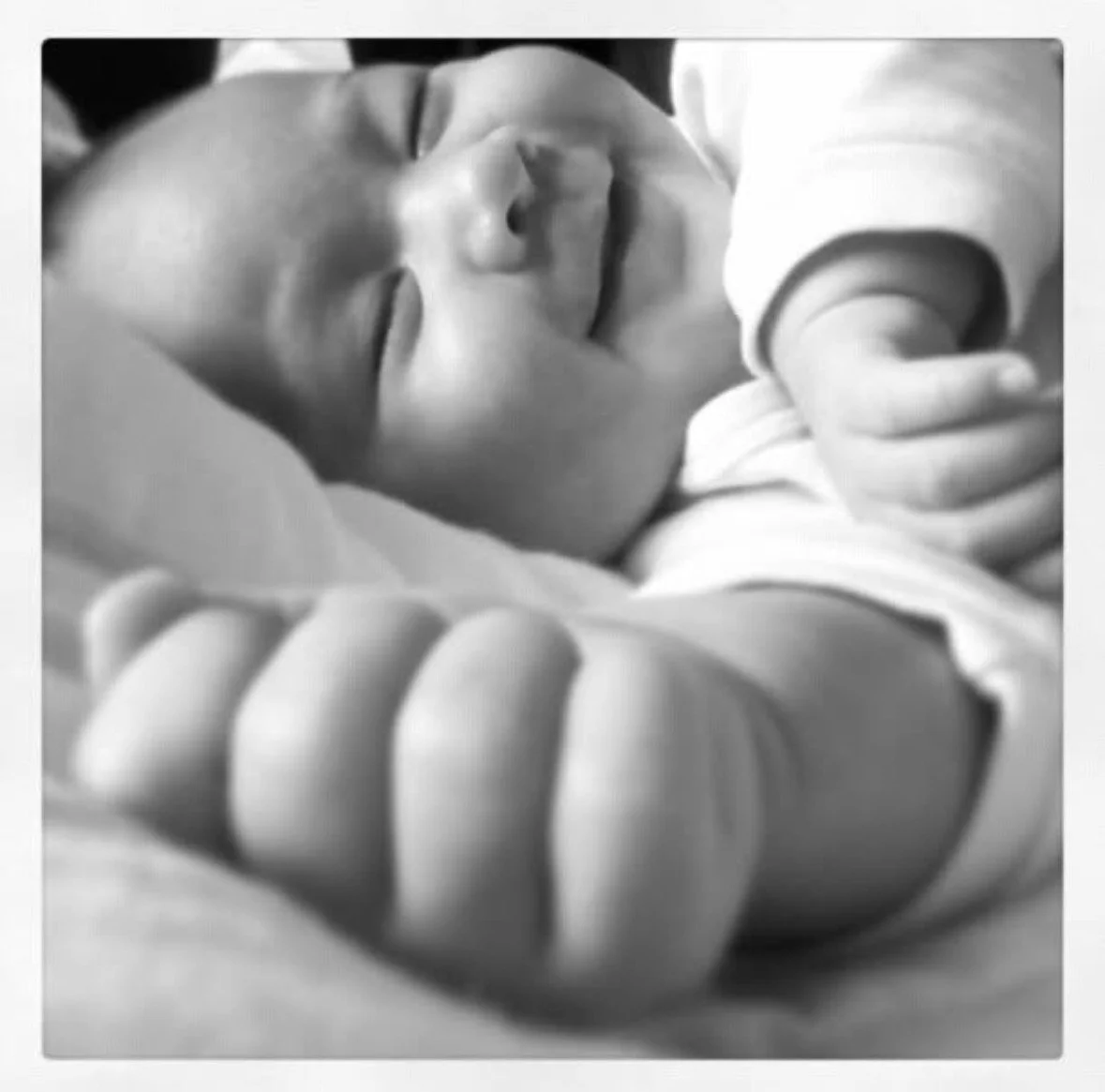
My babies name is Herengarangi Hei Korowai Rere o Hua, born 28/12/2012
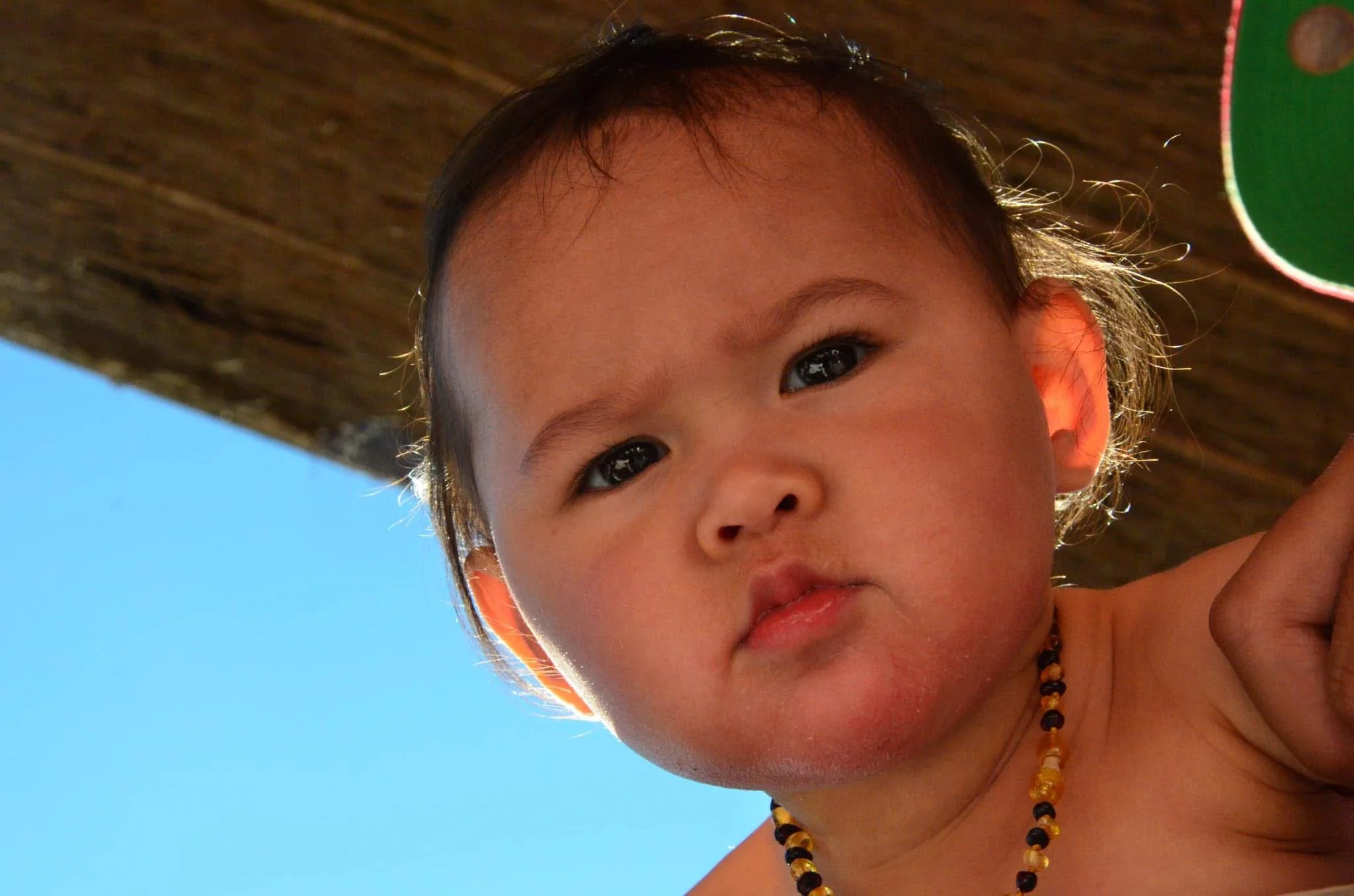
In 2019, I birthed my pē, Hinemaiora. I wanted to give birth at home on our papakāinga, Parihaka. Although this is what I had planned it did not come to fruition and nature had other plans for me at that time.
With Puhirewa, I had planned a homebirth. I know this is definitely a contrast from 2012.
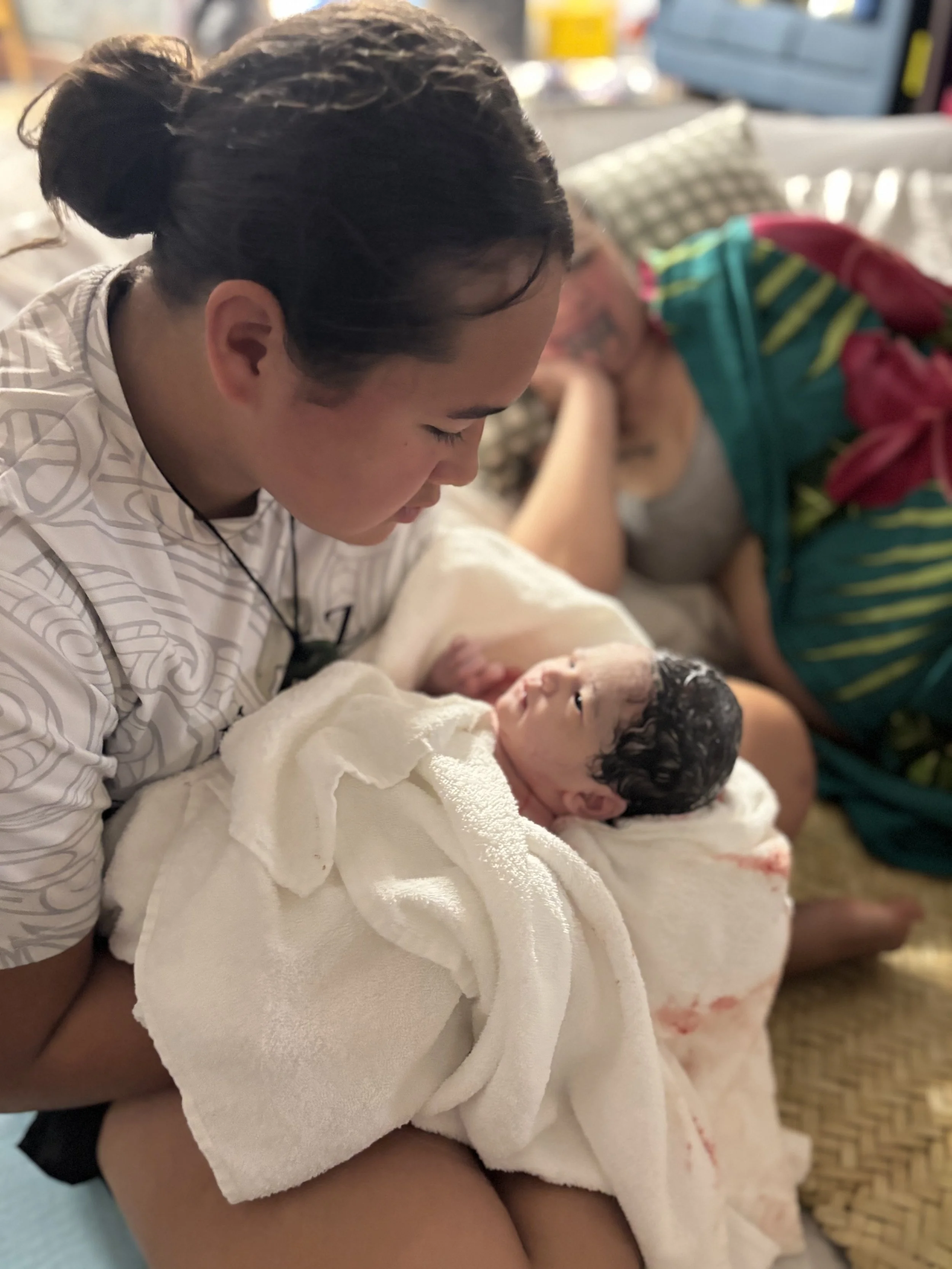
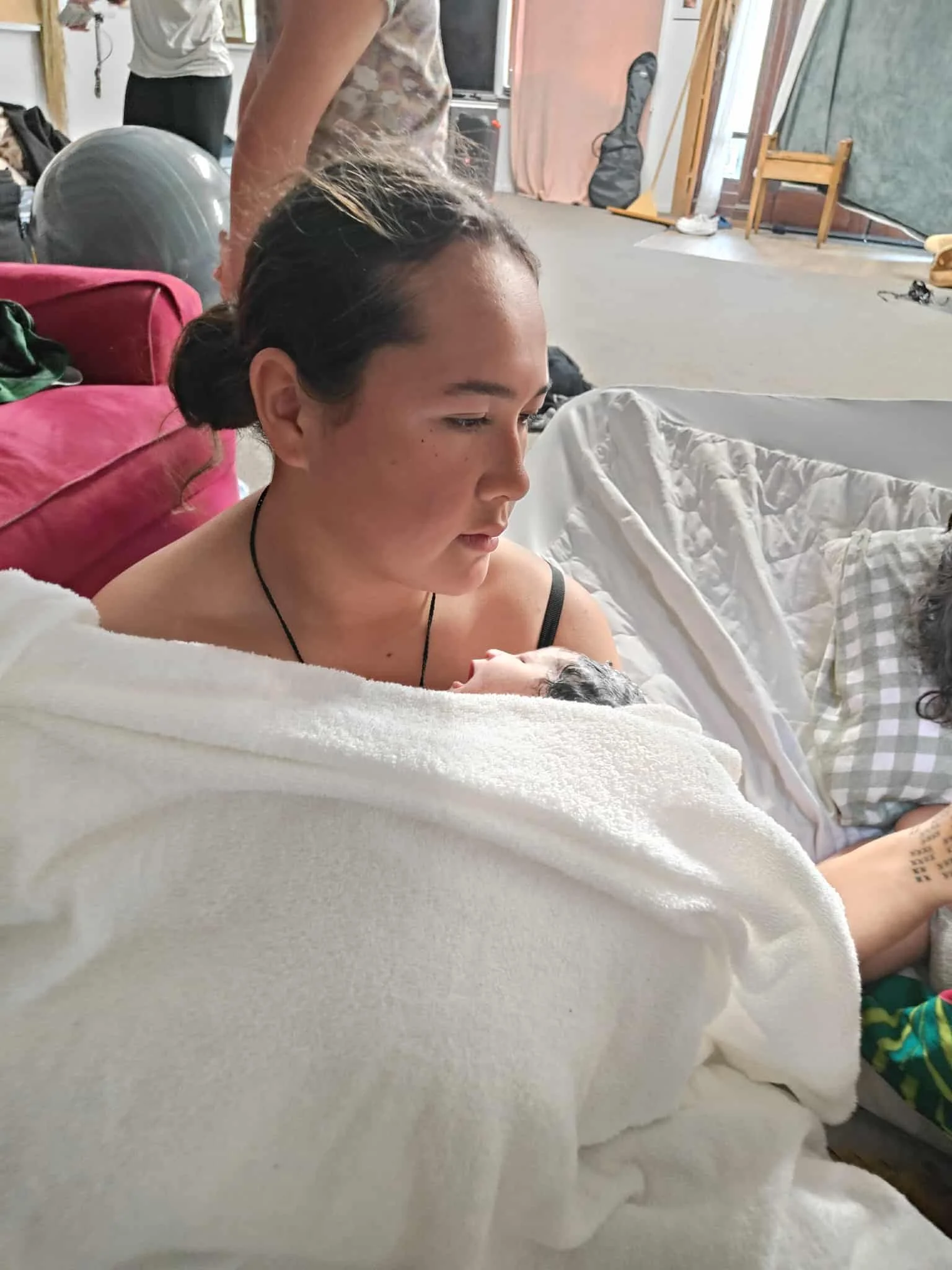
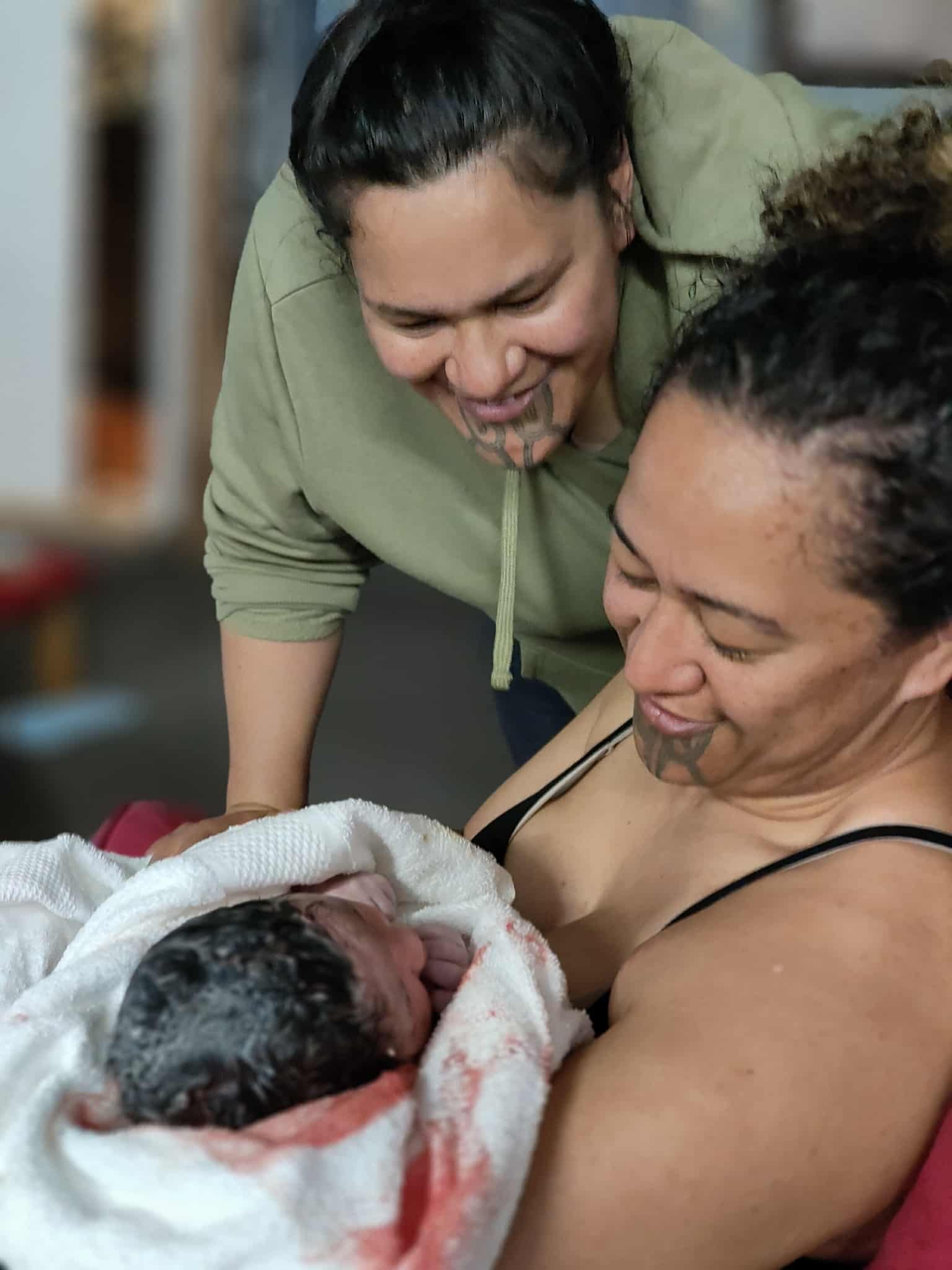
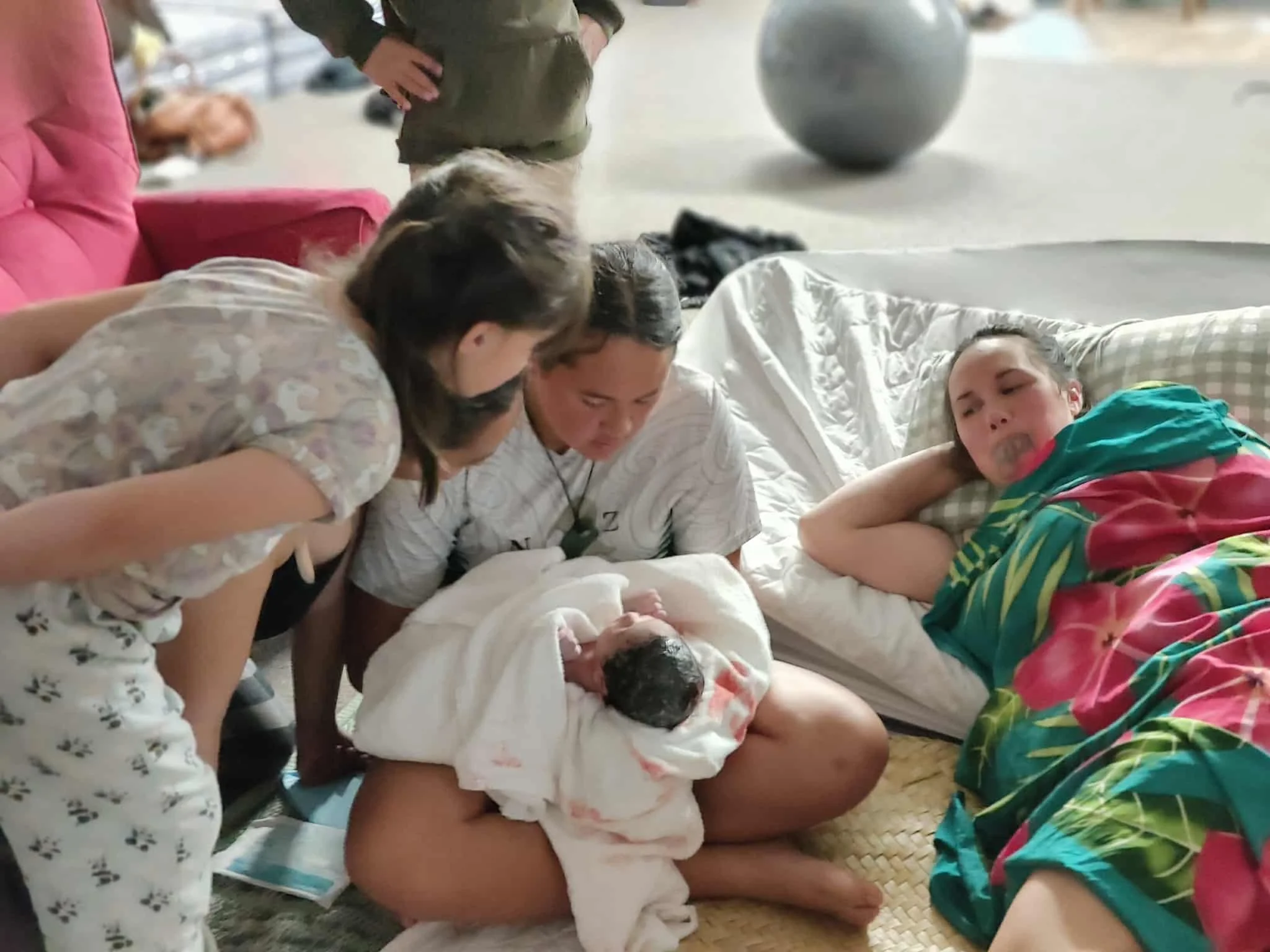
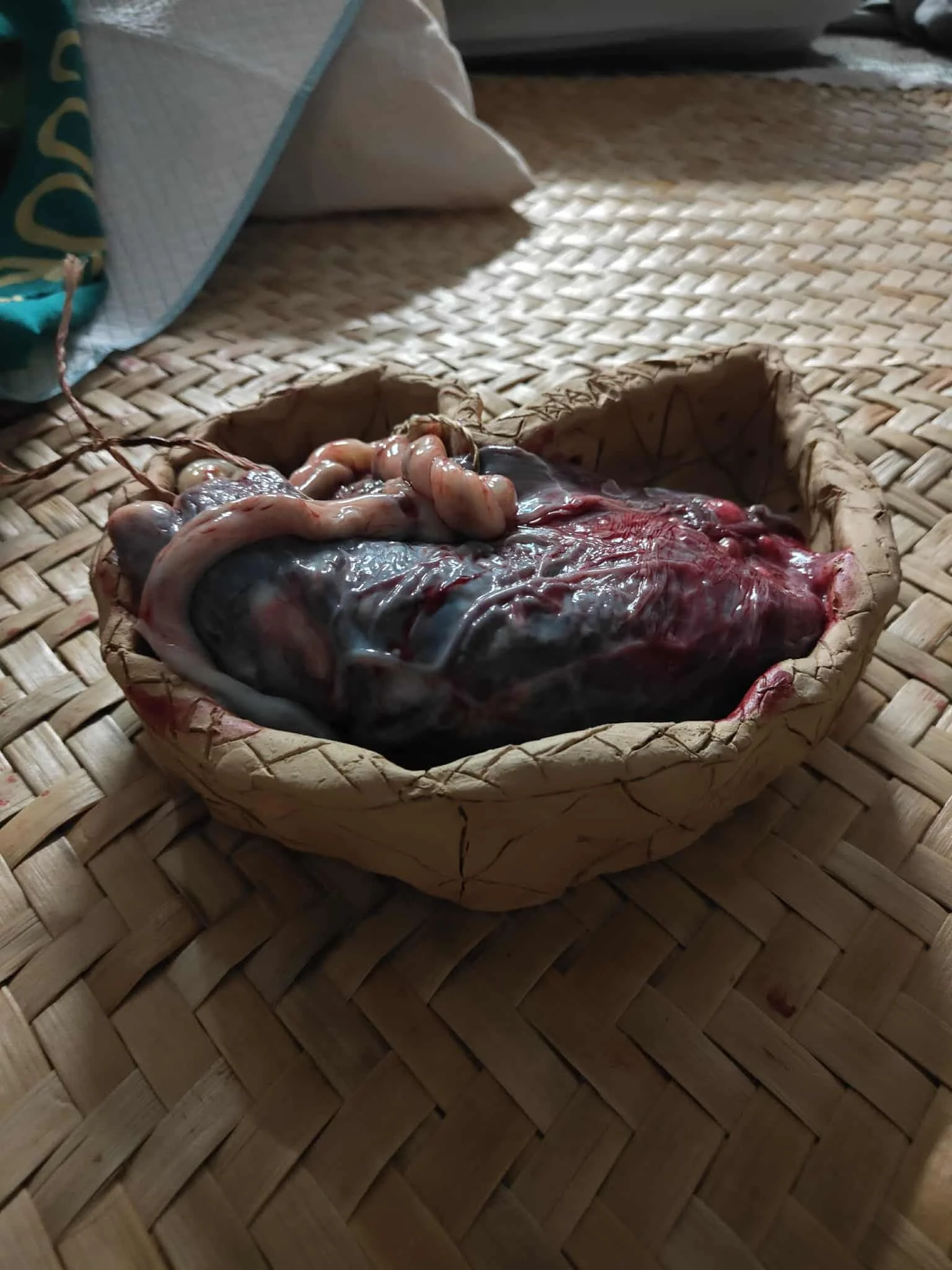
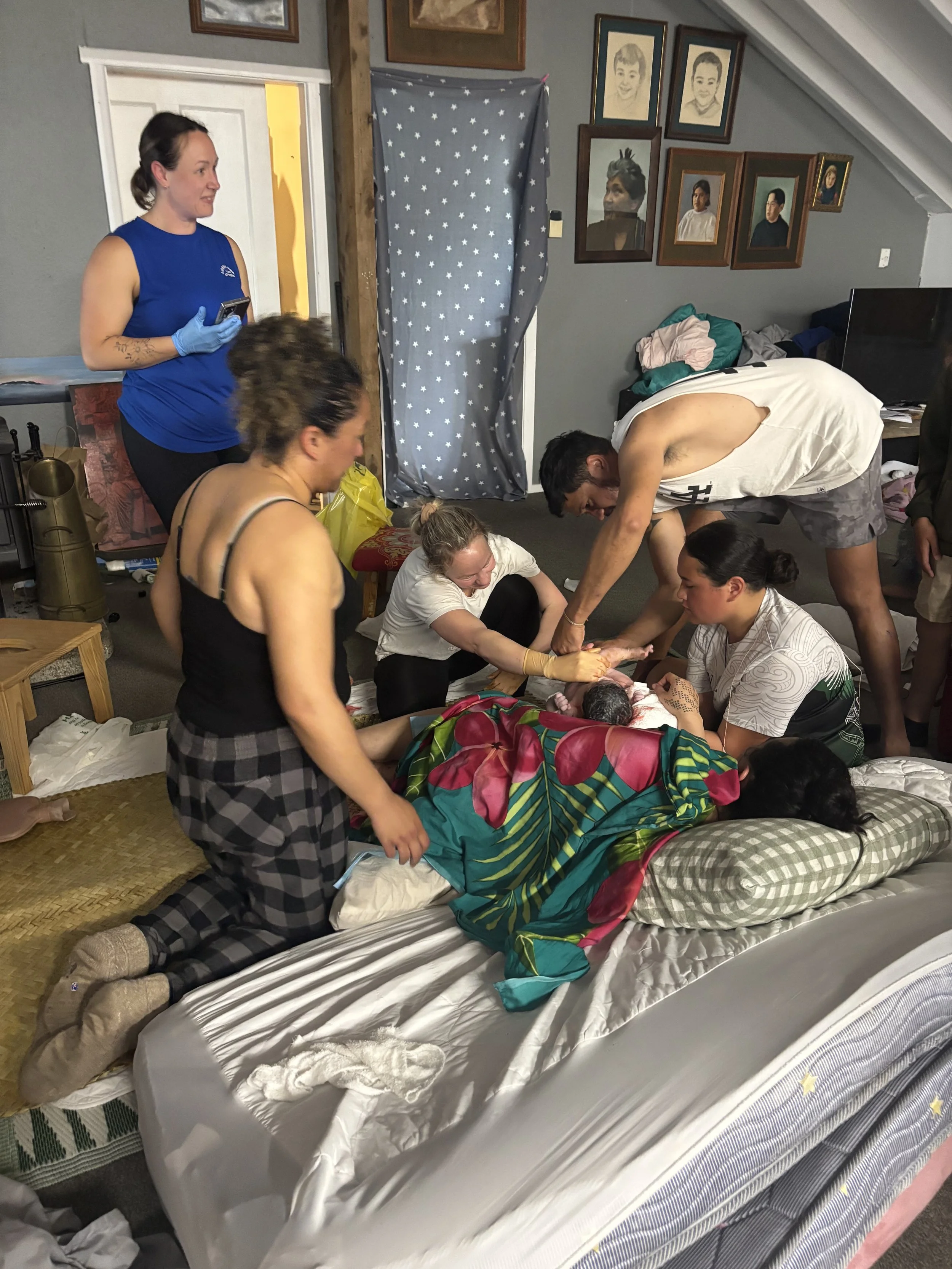
My sister Ngahina Wharehoka weaved my Takapau Wharanui for my Māori wedding ceremony that took place on the the 21st of December 2024. Puhirewa was conceived on this whariki after my Māori wedding ceremony, to consummate our marriage.
It was a cold wet morning and the energy was right at 4am on September 23rd 2025, 2 days before the due date. I started to get contractions. I got up out of bed and walked into our wharenui. I turned the aroma diffuser on and lay on a mattress close to the fireplace. My son Te Ita woke and started to rub my back as the contractions grew stronger. I started to sit up on all fours holding pillows in front of me. My husband lit the fire and tidied up the place. I had planned to have a water birth and had the birthing pool, however as the contractions grew I realised it may take too long to fill, and I couldn’t be bothered waiting for it to be set up.
My sister in-laws started to arrive as well as my midwife.
As active labour intensified it was difficult to push through the contractions on all fours, so I turned on my back to try get her moving down and then I ended up standing up and I was held up by my sisters in-law, husband, and midwife, to make sure they were ready to catch baby.
I must admit I had a lot of anxiety leading up to the birth and during the labour I was told I had to move into different positions to push pēpē through, otherwise her heart rate would slow. I started to panic a little that we would have to leave for the hospital.
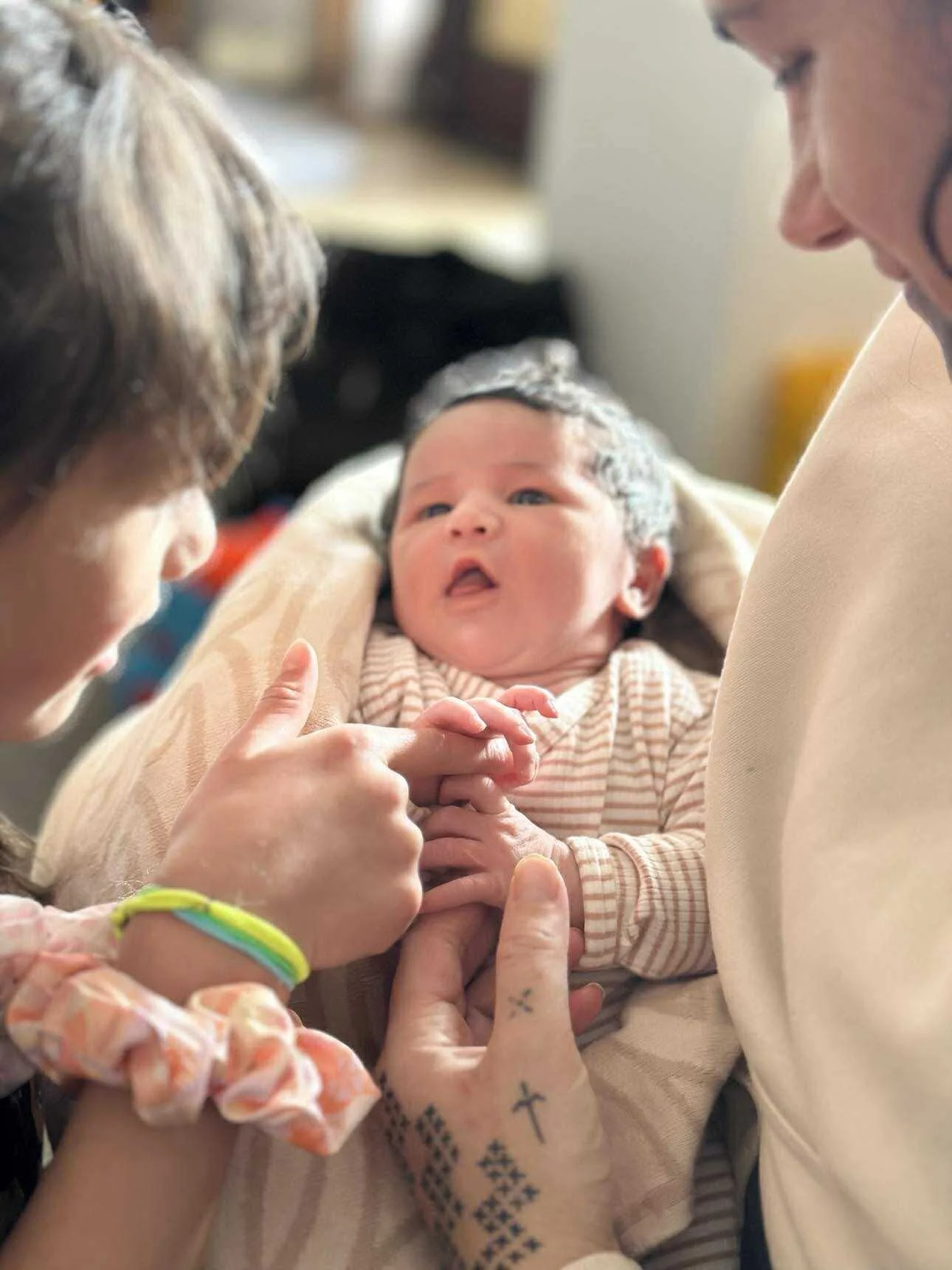
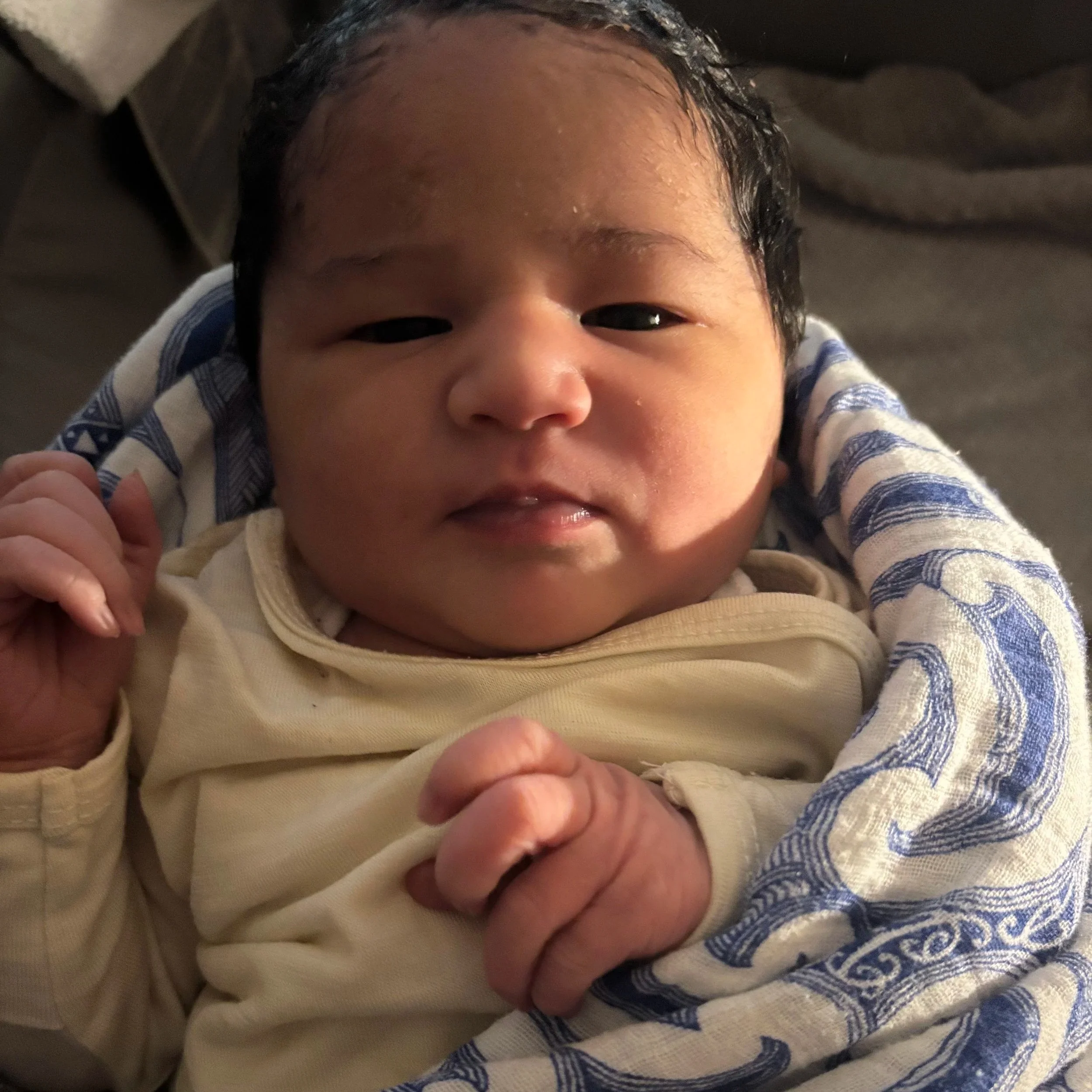
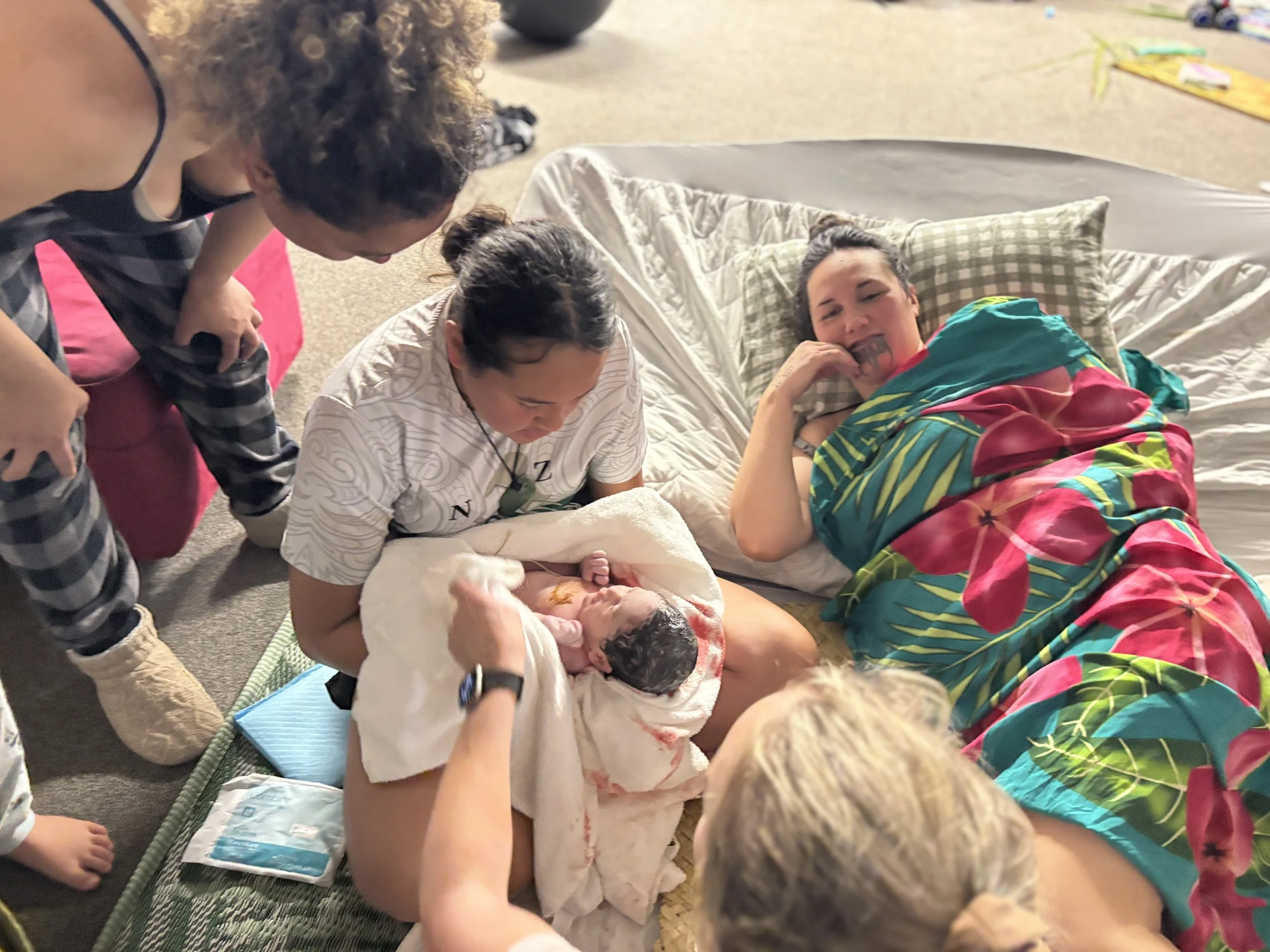
After a couple of hours of active labour, Puhirewa was born into her pāpā’s hands and onto the Takapau Wharanui.
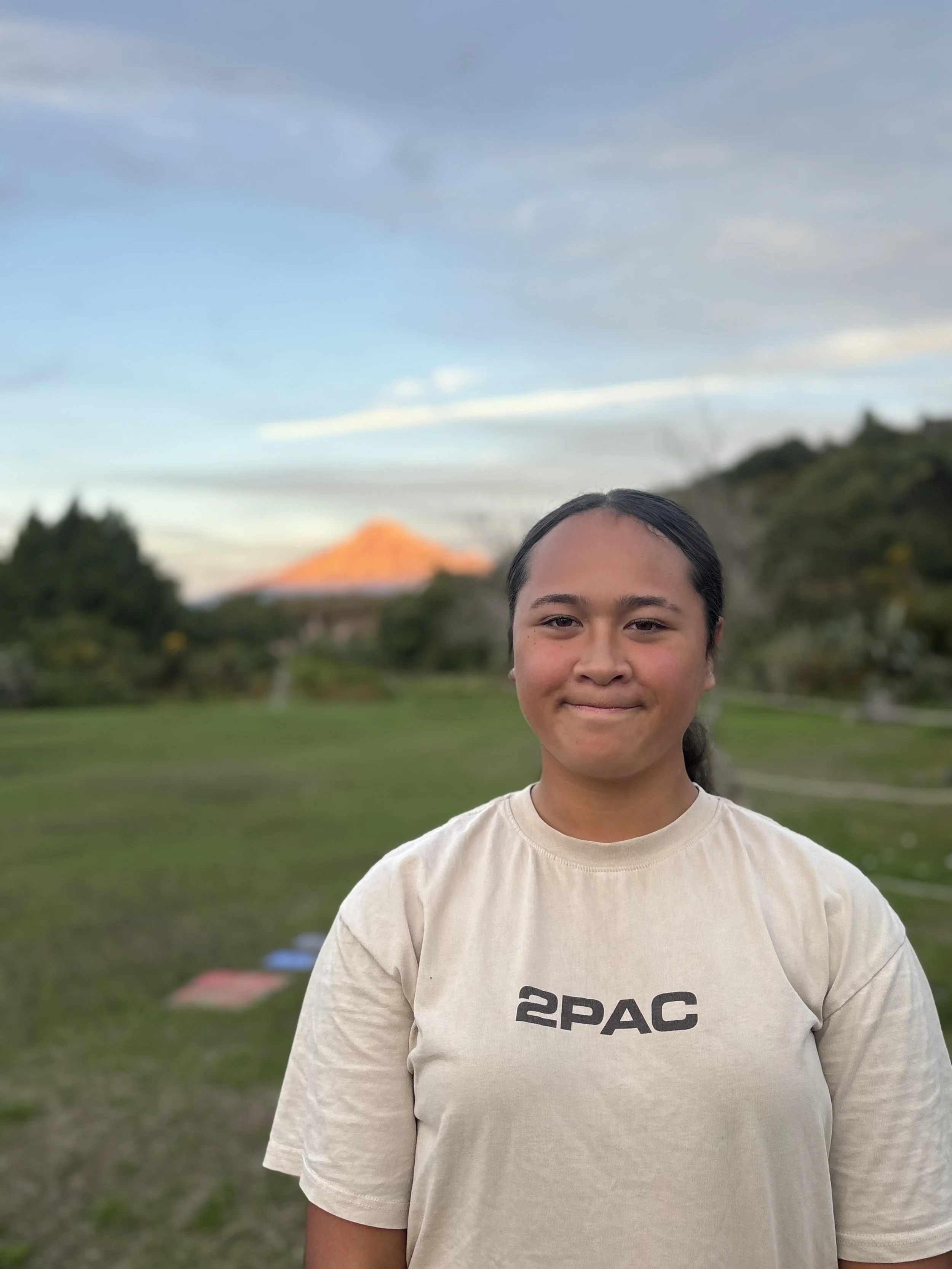
Her tuakana, Herengarangi had skin to skin with her, and her brother Te Ita helped tie off the umbilical cord with muka, and cut it guided by his pāpā.
This experience for me was a bittersweet one as it was my first birth without my mother in law Maata. To birth in our whanau home on our papakāinga supported by the woman who are Pou in my life , in front of my children on our Takapau wharanui is a feat in my life. I feel like I have reached the pinnacle of my wāhinetanga and my experiences as a māmā.
Ko Puhirewa-Kirangi Te Takapau I Miriātepō Wharehoka tona ingoa.
E mihi ka tika kia koutou te hunga kaitiaki māmā - a huge mihi to Tawera Trinder, Hapu Wananga Taranaki and all it’s kaimahi for allowing space for Māori / Pākeha alike to learn, embrace and be empowered to choose our own path as māmā. Hapū Wānanga has created a movement for our rohe and is inspired me and my whanau to practice and share our journey.
Ka nui te mihi ki te hunga mate kia Miriatepō , ko toku māmā Maata haere haere oki oki ai.